7 meetings that ended in shouting. 18 months of brothers not speaking. N380,000 on lawyers, surveys, and travel that resolved nothing. A mother who sets a Sunday table her sons no longer sit at. That was the dispute without a framework. Now you have one. The Dispute Map documents every position before anyone sits in a room. The Structured Meeting Format gives every voice a turn without interruption. The Resolution Options show 5 paths forward instead of one fight. The Family Agreement captures the decision before anyone leaves the room. And the Relationship Restoration begins healing what the dispute damaged. The land is the same land. The conversation changes. And when the conversation changes, the family can decide. Together. Alongside your lawyer.
"The land isn't the problem. The conversation is. Change the conversation."
"My family is fighting over land. That has not changed yet. What has changed is that I now have a framework for the next meeting. Not another shouting match. A structured mediation. Every position documented. Every voice heard. Every option evaluated. A written agreement before anyone walks out. The framework doesn't decide who gets the land. It gives my family the structure to decide together. And deciding together means we might still be a family when the land is settled. Alongside our lawyer."
Your Framework Is Ready
Click below to download the complete guide and both bonus templates instantly.
Download Your Guide NowHere's What You Got
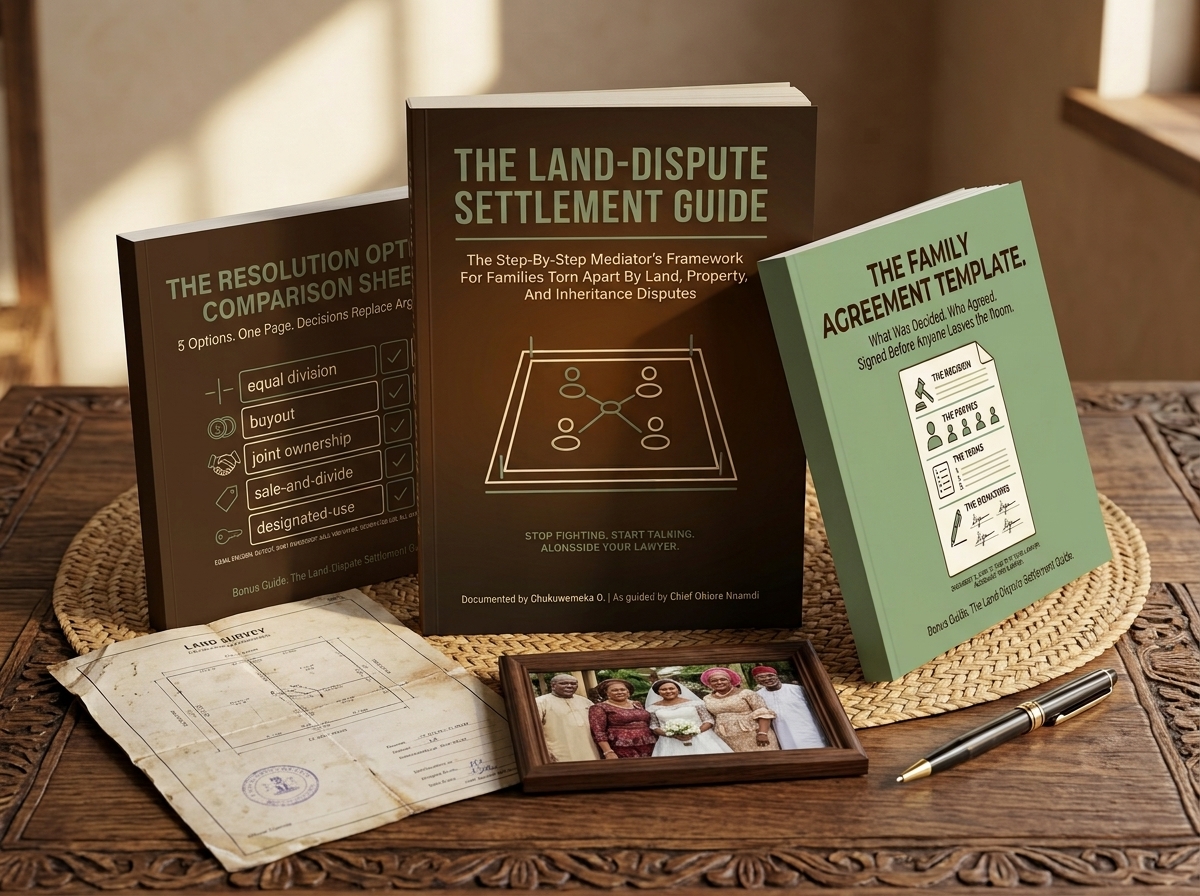
The Dispute Mapping Template (document every claim before the meeting). The Structured Family Meeting Format (agenda, speaking order, time limits, ground rules). The 5 Resolution Options (equal division, buyout, joint ownership, sale-and-divide, designated-use). The Family Agreement Template (written, signed, documented). The Relationship Restoration Guide (healing the family after the decision). Alongside your lawyer
All 5 options on one page: advantages, disadvantages, best-fit situations. Print it. Bring it to the meeting. Every party sees every option. Arguments become evaluations
Printable agreement: the decision, the parties, the terms, the signatures. Document the resolution before anyone leaves the room. Take it to your lawyer for formalisation
Your First 48 Hours
Download Everything Now
Tap the button above. Save all 3 files. The main guide is your complete framework. The Resolution Options sheet goes to the meeting. The Family Agreement template is signed at the end.
Read the Dispute Mapping Section Tonight
Open the guide. Turn to the Dispute Mapping Template. This is your first action. Before calling any meeting, you document every party's position in writing. Every claim. Every grievance. Every piece of evidence they cite. When the Dispute Map is complete, every family member sees their position acknowledged on paper. That acknowledgment alone reduces the need to shout.
Start Your Dispute Map This Week
Contact each family member involved. One at a time. Privately. Ask them to state their position, their reasoning, and what outcome they want. Write it down exactly as they say it. Do not argue. Do not correct. Document. When every party's position is documented, you have the Dispute Map. This is what you bring to the structured meeting.
Read the Structured Meeting Format
Before calling the meeting, read the format completely. Understand the agenda structure, the speaking order, the time limits, the ground rules. The meeting will be different from every previous meeting because it has a FRAMEWORK. You may want to identify a neutral person to chair the meeting — someone all parties respect who has no stake in the outcome. The guide explains what to look for in a chair.
Print the Resolution Options Sheet (Bonus #1)
Print enough copies for every party at the meeting. When the meeting reaches the decision phase, hand each person a copy. All 5 options visible. Advantages and disadvantages listed. The conversation shifts from "what I want" to "which option works for the family." This single sheet has resolved more disputes than any shouting match ever has.
What to Expect
Do This Right Now
Open the guide. Turn to the Dispute Mapping Template. Write the first name: your own. Document YOUR position first. What do you want? What is your reasoning? What outcome would you accept? Then contact one other family member. The one most likely to engage calmly. Document their position. Two positions documented. The Dispute Map has begun.
That single action — two positions written down instead of shouted — is the beginning of a different conversation. The framework starts with a pen and a page, not a room full of chairs.
"The land isn't the problem. The conversation is. Change the conversation and the family can decide. Together. Alongside your lawyer."

Need Help?
Not sure how to start the Dispute Map? Need guidance on choosing a neutral chair? Question about which resolution option fits your situation? Every message answered. Alongside your lawyer for all legal matters.